

How To Build A Wildlife Pond
If you are looking to attract more wildlife to your garden, a pond is a fantastic way of achieving that. Adding water to your garden will lead to frogs, newts, birds, hedgehogs and insects seeking it out for food, hydration and a home. The great thing about creating your own wildlife pond is that it doesn’t need to be huge, even a small garden can accommodate one and it doesn’t need to be perfect. Here’s how to build a wildlife pond to suit your garden.
What You Will Need:
- Spade
- Wheelbarrow
- Spirit level
- Pond liner or pre-formed pond. For a smaller garden a tub or planter
- Builders sand
- Rocks/wood/logs
- Pond plants
- Stones for edging
- Surrounding plants
- Water – preferably rainwater
Choosing Your Spot
Choose a spot in your garden that gets a good amount of sunlight and partial shade during the day. Avoid placing it under overhanging branches as leaves will lead to sludge and build up in your pond. Also, choose somewhere a little bit away from the house, play areas, and pets as a quieter area will encourage more visitors.
Once you have your chosen location, mark out the shape and size you’d like using either string, spray paint or by simply using a trowel to make a dent in the soil. Now you are ready to start digging.
Instructions For Each Type of Pond
Now, depending on the type of pond you are going for, the set-up instructions will vary slightly:
Liner
If you have chosen to create your pond using a liner, you will need to carry out more prep than you would with the other options. Your pond will need to have shallow shelves that will lead down to a deeper bottom (max depth of 60 cm). Carefully shape and carve out your pond using a shovel and check everything is level as you go. Remove sharp objects you may come across such as stones, rocks and bricks. When you are happy with the shape and size, add around 5 cm of builders’ sand which will act as a protective barrier between the liner and ground. An underlay is also recommended to prevent plant roots from penetrating through. Now you can unroll your liner and carefully ensure that it covers all areas of your newly dug pond. Push it into all the contours, smooth it over and leave enough around the edges to be trimmed and tidied once it is filled with water.
Pre-formed Pond
Using a pre-formed pond, is a far less fiddly job than a liner and it will give you a similiar end result. Dig your hole, replicating the shape of your purchased pre-formed pond but add around 5 cm more on the width and depth. Remove any sharp objects such as rocks and stones and check everything is level. Test the size and shape by placing the pond inside. Once happy, remove this, add 5 cm of sand and smooth over and level again. Pop your pond back inside and fill any remaining space around it with the rest of your sand.

Tub or Planter
If you are limited on space, a small washing up tub or planter make for two great alternatives to a liner or pre-formed pond. Simply follow the same steps as the above pond on a smaller scale. This is the type of wildlife pond we have in our small garden and it has worked really well for us.
Begin To Fill
The best way to fill your pond is by using rainwater. If you know you are due for some rain, you can just wait and see if it’ll be enough to naturally fill your pond, otherwise take water from a waterbutt. Tap water contains nitrates and phosphates which may give you algae problems. As you fill, check for any problems such as pooling more to one end, the planter or tub becoming unbalanced and for leaks.
Edging
If you have used a liner, you can now trim your liner but not too short as you don’t want movement or water/debris getting underneath. You can hide this under stones, rocks and logs which give a lovely natural look and feel to any wildlife pond. This goes for the pre-formed pond and your planter. Stones and rocks can be used to cover the plastic edge. These will also create hidey-holes and habitats for bugs and insects.

Finishing Touches
Your pond is first and foremost designed for wildlife so you need to action a few things to make it fit for purpose:
- Ensure that animals such as hedgehogs can escape if they fall in. Use rocks as steps, add a log or piece of wood as a walkway, make sure the edges have things they can grip onto such as plants/moss/ferns/logs etc.
- Create habitats using a log pile, bug houses, stones/rocks and so on
- Provide shelter by using a variety of planting and strutures
- Add flowers to attract insects
- Research your pond plants and choose accordingly
- Add shingle to the base of the pond to create a habitat for aquatic creatures

If you are feeling creative, you could also add a waterfall, a small water fountain (solar powered ones work well), a beach area or even a mini stream.
Pin for later:

Related Posts
10 Tips For Creating Your Own Secret Garden

When we step out into our gardens, we want more than just a patch of grass or a few flowerbeds. Read more
How to Create a Classic Cottage Garden
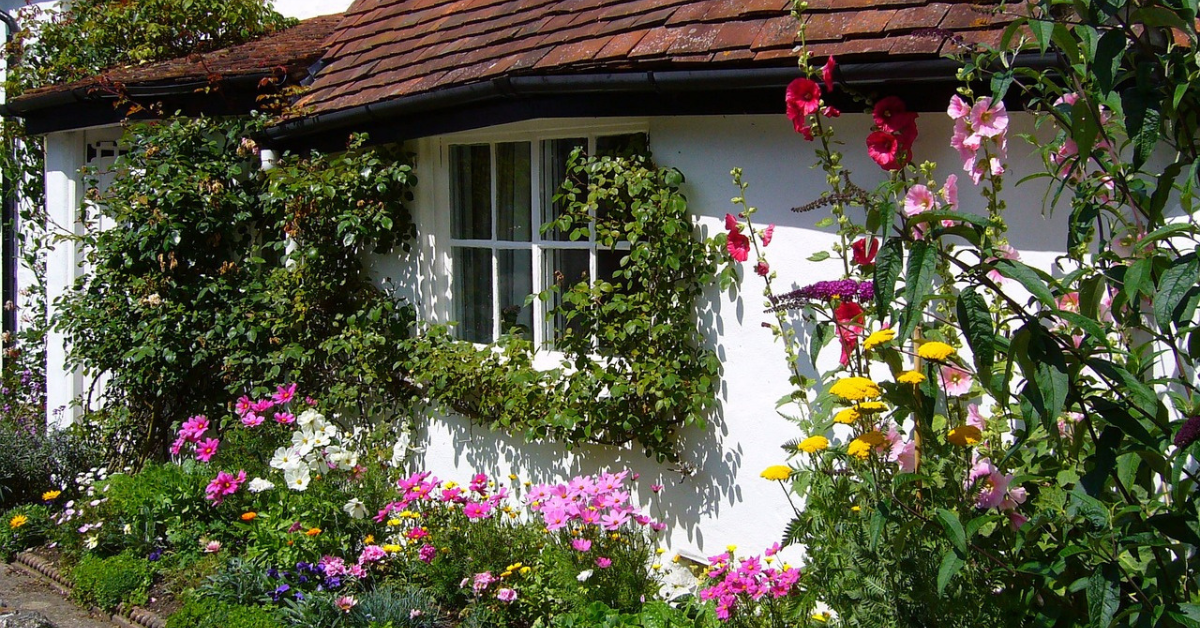
There is just something so timeless about a cottage garden. It feels romantic and full of life, like stepping into Read more
How To Encourage More Wildlife Into Your Garden

When we moved into our fairly new build home, the (small) garden was, well, not doing very much. It had Read more
7 Of The Best Plants for a UK Garden

When I talk to people who’ve tried gardening and given up, it’s often because they've picked plants that demanded more Read more